
AI in sales pipeline management is defined as the use of predictive analytics, machine learning, and automation to continuously monitor deals, flag risks, and recommend next steps inside your CRM. This replaces the old model of weekly pipeline reviews with real-time deal health tracking that never sleeps. Platforms like Salesforce, HubSpot, and monday.com have embedded these capabilities directly into the tools sales teams already use daily. The shift is significant. Sales professionals who adopt AI-driven sales strategies spend less time on CRM upkeep and more time closing deals.
How does the role of AI in sales pipeline management work?
AI in sales pipeline management replaces manual CRM updates and periodic reviews with dynamic, real-time deal health monitoring and forecasting. That means a rep no longer has to remember to log a follow-up or flag a stalled deal. The system detects it automatically and surfaces the right action at the right moment. This is the core shift: from episodic visibility to continuous visibility.
The industry term for this capability is AI-guided selling. Salesforce defines AI-guided selling as surfacing the right actions and deals through the sales process inside CRM, relying on clean data and ongoing iteration. It includes automated lead qualification, personalized outreach, and deal context that suggests next steps. The practical result is a pipeline that manages itself at the operational level, freeing reps for high-value conversations.

Sales pipeline automation also changes how managers operate. Instead of asking reps to self-report pipeline status in weekly calls, managers get a live view of deal health across the entire book of business. Risk is visible before it becomes a missed quarter.
How does AI improve forecasting and risk detection in sales pipelines?
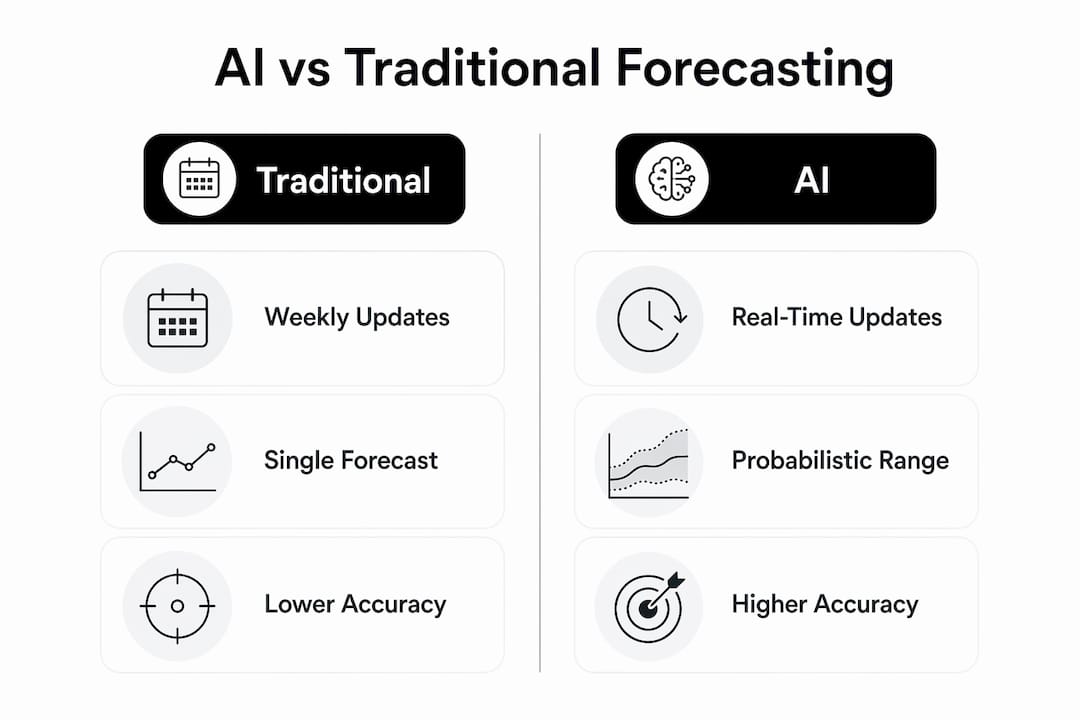
Traditional sales forecasting produces a single number. AI forecasting produces probabilistic forecasts with confidence intervals, giving leadership a realistic range rather than false precision. That distinction matters because single-point estimates create overconfidence. A forecast that says "$2.1M" feels certain. A forecast that says "$1.8M–$2.3M at 80% confidence" tells a more honest story.
Risk detection works by comparing live pipeline signals to historical patterns. AI tools track deal velocity, engagement frequency, and stage duration, then flag deals that deviate from the patterns of deals that previously closed. monday.com describes this as monitoring deal velocity and engagement to flag stalled deals before quarterly targets are impacted. The move from static reports to live pipeline systems is what makes proactive deal management possible at scale.
Pro Tip: Require your AI forecasting tool to show confidence intervals, not just a single projected number. If a vendor cannot show you a range, the forecast is not calibrated and should not be trusted for planning.
The table below shows how AI forecasting compares to traditional methods across key dimensions.
| Dimension | Traditional forecasting | AI forecasting |
|---|---|---|
| Update frequency | Weekly or monthly | Continuous, real-time |
| Output format | Single-point estimate | Confidence interval range |
| Risk detection | Manual review | Automated anomaly flagging |
| Data source | Rep self-reporting | CRM activity and engagement data |
| Accuracy driver | Manager judgment | Historical pattern matching |
Clean CRM data is the prerequisite for all of this. Consistent logging and data mapping are prerequisites for actionable AI insights. Garbage in, garbage out applies directly to machine learning in sales management. If reps are not logging calls and updating stages consistently, AI scoring becomes unreliable.
What are the practical AI-powered automation features in pipeline management?
AI-powered automation in pipeline management covers four distinct areas that directly affect rep productivity and pipeline health.
- Pipeline hygiene automation. AI auto-updates deal data based on email activity, calendar events, and call logs. Reps no longer spend time manually entering what happened after a meeting. This alone recovers hours per week per rep.
- Stage-based workflow automation. HubSpot enables stage-triggered workflow automation by firing tasks, emails, and notifications automatically as deals move between stages. Without this, AI recommendations often go unread. With it, the system enforces consistent execution across the entire team.
- Next Best Action recommendations. Pitcher's Next Best Action (NBA) AI uses customer and engagement data to recommend prioritized next steps embedded in the rep's daily workflow. It flags accounts needing attention, suggests relevant content, and times prompts during meeting prep or post-call review. This is AI working at the moment of need, not in a separate dashboard.
- Lead scoring and qualification. AI assigns scores to deals based on fit, engagement, and historical conversion data. Reps focus on the deals most likely to close rather than spreading attention evenly across a crowded pipeline.
Pro Tip: The biggest mistake in sales pipeline automation is building AI insights into a separate reporting tool. Embed them directly inside Salesforce or HubSpot where reps already work. Adoption follows convenience.
Outreach automation is the next frontier. AI tools now handle initial follow-up re-engagement for dormant deals, sending personalized messages based on deal context without rep involvement. This keeps deals warm without consuming rep time.
How to successfully implement AI in sales pipeline management
Successful implementation follows a clear sequence. Skipping steps, especially the first one, produces unreliable AI outputs that erode trust and kill adoption.
- Clean your CRM data first. Stable AI pipeline scoring depends on rigorous CRM hygiene and consistent activity data capture. Audit your current data quality before selecting any AI tool. Fix stage definitions, remove duplicate records, and enforce logging standards.
- Select tools that integrate with your existing CRM. Salesforce, HubSpot, and monday.com all offer native AI capabilities. Adding a standalone AI tool that does not connect to your CRM creates data silos and doubles the work for reps.
- Embed AI insights into rep workflows. AI-guided selling is most effective when treated as a workflow support system inside CRM rather than standalone analytics. Place recommendations where reps already look: pipeline views, deal records, and post-call summaries.
- Train reps on the new workflow. Adoption does not happen automatically. Run structured onboarding sessions that show reps exactly how AI suggestions appear and what action to take. Tie AI usage to pipeline review conversations so managers reinforce the behavior.
- Iterate based on results. AI models improve with feedback. Review forecast accuracy monthly, adjust scoring weights, and update stage definitions as your sales process evolves. Treat the AI system as a living tool, not a one-time deployment.
Coordination between sales operations, IT, and sales leadership is non-negotiable. Each group owns a piece of the implementation. Sales ops owns data quality and workflow design. IT owns integration and security. Leadership owns adoption accountability. Misalignment between these three groups is the most common reason AI implementations stall. You can also apply lessons from AI in campaign management to reinforce the same clean-data-first principle across your go-to-market operations.
What measurable benefits can sales teams expect from AI-driven pipeline management?
The impact of AI on sales is measurable across several dimensions that matter to both reps and leadership.
- Time savings. Automated pipeline hygiene eliminates manual CRM data entry. Reps recover meaningful selling time each week that was previously spent on administrative updates.
- Earlier risk detection. Continuous deal health monitoring catches stalled deals weeks before a quarterly review would surface them. Earlier detection means more time to intervene and recover the deal.
- More trusted forecasts. Calibrated confidence intervals prevent "AI forecast theatre," where leadership receives a precise number that nobody actually believes. Trustworthy forecasts improve planning and resource allocation.
- Higher conversion rates. AI lead scoring directs rep attention to the deals most likely to close. Prioritization based on data consistently outperforms prioritization based on gut feel.
- Better customer experience. Timely follow-ups triggered by stage automation mean prospects receive consistent, relevant communication. That consistency builds trust and accelerates decisions.
monday.com reports that continuous monitoring supports proactive deal management and scalable oversight without increasing management overhead. That is the compounding benefit. As your pipeline grows, AI scales with it. A manager overseeing 50 deals gets the same real-time visibility as one overseeing 10, without hiring more people to watch the pipeline.
The operational cost savings from AI extend beyond sales. Reduced manual work, fewer missed follow-ups, and better resource allocation all contribute to a lower cost per closed deal over time.
Key takeaways
AI in sales pipeline management works best when clean CRM data, embedded workflows, and continuous monitoring operate together as a single system rather than separate initiatives.
| Point | Details |
|---|---|
| Continuous monitoring over reviews | AI replaces weekly pipeline calls with real-time deal health tracking that flags risk automatically. |
| Confidence intervals beat single estimates | AI forecasting tools should output probability ranges, not single numbers, to build leadership trust. |
| Embed insights in existing CRM tools | Recommendations placed inside Salesforce or HubSpot drive adoption; standalone dashboards do not. |
| CRM hygiene is the prerequisite | Clean, consistently logged data is required before AI scoring or forecasting produces reliable results. |
| Stage automation enforces execution | HubSpot-style pipeline automations translate AI insights into consistent team actions at every deal stage. |
What I've learned about AI and pipeline health after years in the field
Most sales leaders I talk to treat AI as a forecasting upgrade. They buy a tool, connect it to Salesforce, and expect better numbers at the end of the quarter. That is the wrong frame entirely.
The real value of AI in pipeline management is not the forecast. It is the continuous signal. When a deal goes quiet for 12 days and AI flags it before your manager asks about it in the next pipeline review, that is where revenue is saved. The mindset shift from "review the pipeline weekly" to "the pipeline tells me when something needs attention" is the actual transformation.
The hardest part is not the technology. It is the cultural change. Reps who have been self-reporting pipeline status for years resist a system that surfaces their deals' health automatically. Managers who built authority on reading the pipeline intuitively feel threatened by a tool that does it faster. Leadership has to actively sponsor the change, not just approve the budget.
I am genuinely optimistic about where autonomous AI agents are taking this. The next generation of tools will not just flag a stalled deal. They will re-engage the prospect, draft the follow-up, and update the CRM record without a rep touching it. That is not science fiction. Platforms like Astarlabshub are already building toward that model. The sales teams that win in the next three years will be the ones that treat AI as a teammate, not a reporting tool.
— Carlos
Astarlabshub's AI agents for sales pipeline management
Sales pipeline automation requires more than a single tool. It requires a coordinated system of AI agents that handle deal monitoring, outreach, forecasting, and CRM updates simultaneously.
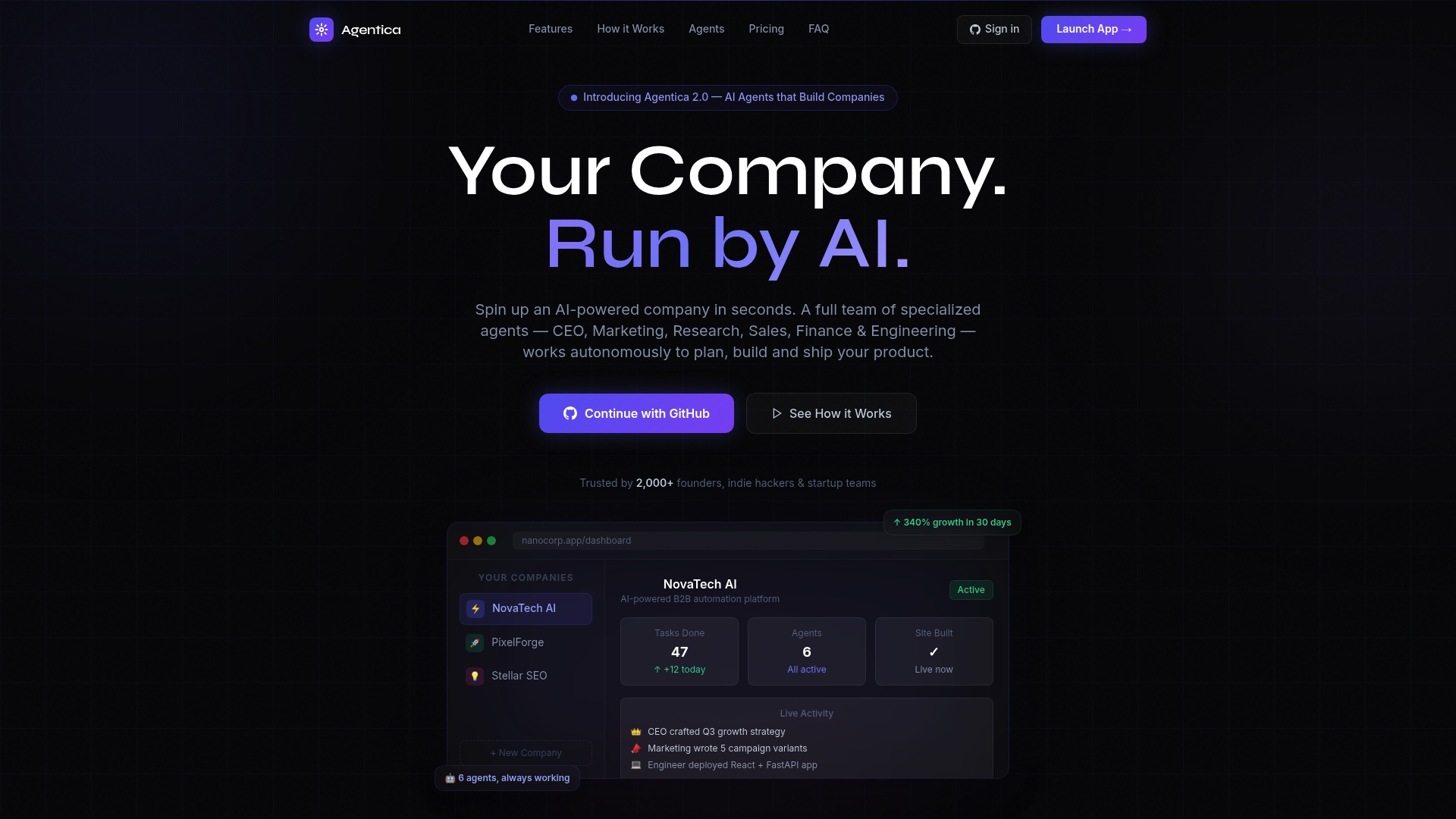
Astarlabshub's Agentica platform deploys specialized AI agents across your sales operations, including roles focused on pipeline health, deal risk detection, and next-step recommendations. These agents work continuously, not just when a rep logs in. The result is a pipeline that stays current, flags problems early, and keeps your team focused on closing. Explore the full AI agent capabilities or review the platform features to see how Agentica fits your current sales stack.
FAQ
What is AI-guided selling in a sales pipeline?
AI-guided selling is the practice of using machine learning to surface the right deals and next steps inside a CRM, replacing manual judgment with data-driven recommendations. Salesforce defines it as embedding these insights directly into the sales workflow rather than a separate analytics tool.
How does AI improve sales forecasting accuracy?
AI forecasting produces confidence interval ranges instead of single-point estimates, which prevents false precision and builds leadership trust. Tools like Fairview use calibrated probability outputs so planning decisions are based on realistic scenarios.
What CRM data is needed for AI pipeline management to work?
Consistent activity logging, accurate stage definitions, and clean contact records are the minimum requirements. Without reliable CRM hygiene, AI scoring and next-best-action recommendations produce unreliable outputs.
How does HubSpot use AI in pipeline automation?
HubSpot triggers stage-based automations, including tasks, emails, and notifications, automatically as deals move through pipeline stages. This translates AI insights into consistent team execution without requiring manual follow-through from reps.
What is the biggest mistake when implementing AI in sales pipelines?
Building AI insights into a standalone dashboard instead of embedding them inside the CRM where reps already work is the most common failure point. Adoption follows convenience, and external tools are consistently underused.