
AI in marketing operations is defined as the use of automated systems and intelligent agents to execute, monitor, and improve marketing workflows without constant human input. This is the standard industry term for what practitioners now call "AI-driven MarOps." How AI handles marketing operations covers everything from data syncing and customer segmentation to full campaign execution. Tools like Klaviyo, Canva's AI features, and Claude now sit inside live marketing stacks. 96% of CMOs report that AI is driving end-to-end transformation in marketing. That number signals a structural shift, not a trend.
How AI handles marketing operations: core tasks and automation
AI automates the repetitive, time-consuming work that used to consume most of a marketing team's week. Data cleaning, audience segmentation, asset generation, and performance reporting are the four categories where AI delivers the clearest time savings.
Here is what that looks like in practice:
- Data syncing and cleaning: AI tools pull data from CRMs, ad platforms, and analytics dashboards, then flag inconsistencies and fill gaps automatically. This removes hours of manual spreadsheet work before any campaign analysis begins.
- Audience segmentation: Platforms like Klaviyo use behavioral data to build and update audience segments in real time. A segment that once took a data analyst two days to build now updates continuously without human input.
- Asset generation: Canva's AI features generate on-brand visual assets from a brief. Copy tools built on Claude or GPT-4 produce first-draft email sequences, ad copy, and landing page text within minutes.
- Report creation: AI reporting layers inside tools like Google Looker Studio pull live data and generate narrative summaries. Marketing managers receive a written interpretation of performance, not just a dashboard.
AI automates routine tasks like data cleaning, segmentation, and asset generation while marketing managers shift focus to strategy and oversight. That division of labor is the core operating model for high-performing teams in 2026.
Pro Tip: Build a documented task inventory before deploying AI. List every recurring marketing task, estimate the weekly hours spent on each, and rank them by automation potential. This gives you a clear starting point and measurable ROI targets.

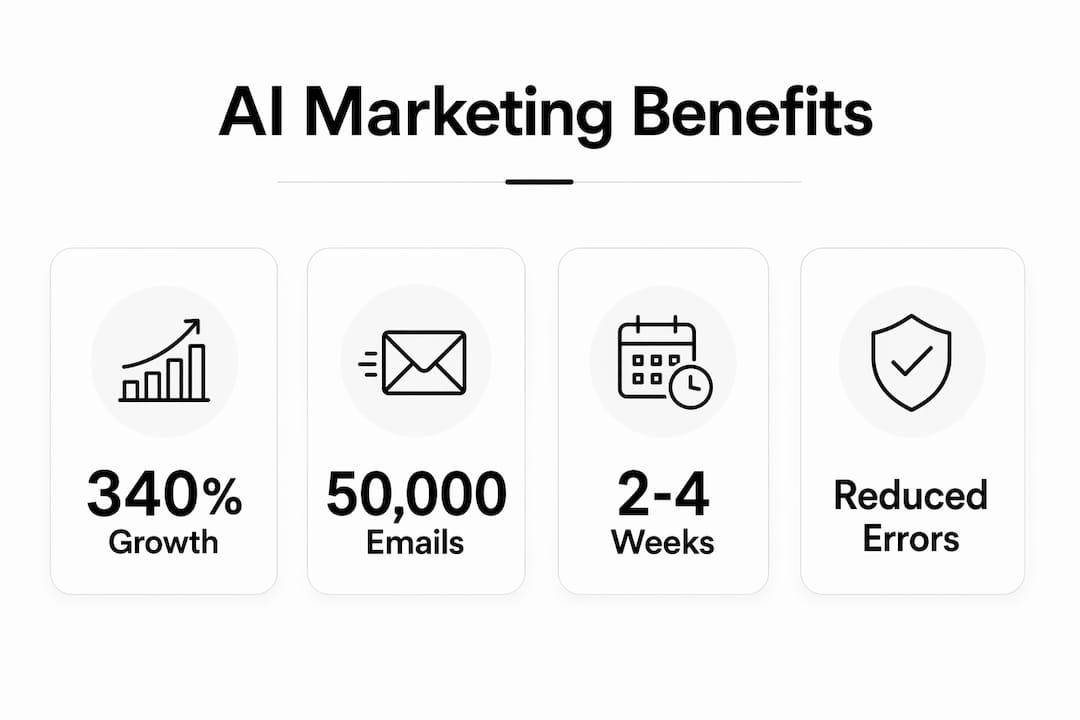
AI also reduces human error in high-volume tasks. When a team sends 50,000 personalized emails, manual processes introduce inconsistencies in merge fields, subject lines, and send times. AI handles those variables at scale with consistent accuracy. AI-driven campaigns complete 60–70% faster than manually executed ones. Speed at that level changes what a marketing team can realistically ship in a quarter.
How do agentic AI workflows improve marketing performance?
Agentic AI is a step beyond single-prompt tools. An AI agent owns a defined slice of work, executes it autonomously, and passes outputs to the next agent in the chain. The result is a coordinated workflow that runs without a human triggering each step.
The difference between isolated AI prompts and an integrated agentic system is significant:
- Isolated prompts: A marketer opens ChatGPT, writes a prompt, gets output, copies it into a doc, and manually moves it to the next tool. Each session starts from zero. No memory. No context.
- Integrated agentic workflows: Specialized agents handle research, briefing, copy, design specs, and scheduling as a connected sequence. Each agent receives context from the previous one and passes structured output forward.
- Persistent memory layers: Persistent memory stores brand voice, taxonomy, and previous feedback so agents improve across repeated interactions. Without it, agents reset each session and lose every lesson learned.
- Feedback loops: Performance data from live campaigns feeds back into the system. Agents adjust targeting, messaging, and timing based on real results, not static rules.
| Feature | Isolated AI prompts | Agentic AI operating system |
|---|---|---|
| Memory across sessions | None | Persistent, cumulative |
| Task handoffs | Manual | Automated between agents |
| Brand consistency | Depends on each prompt | Enforced by stored rails |
| Performance learning | Resets each use | Compounds over time |
| Human input required | Every step | Governance and review gates |
Agentic marketing operations function as a system of integrated agents with persistent memory and defined roles, producing compounding performance over time. That compounding effect is the real competitive advantage. A team running an agentic system in january will outperform a team using isolated prompts by december, even if both start with the same tools.
For a deeper look at how these workflows apply to campaign execution, the 2026 guide on AI campaign automation covers the mechanics in detail.
How has AI changed marketing operations team structure?
Marketing operations used to function as a service desk. Teams received requests, built lists, set up automations, and pulled reports. AI has ended that model. Marketing operations now serves as the central nervous system of go-to-market strategy, shifting from reactive execution to always-on autonomous performance loops.
The role of the marketing manager has changed in three specific ways:
- From executor to orchestrator: Managers no longer build campaigns manually. They define the parameters, approve the frameworks, and review outputs. The AI executes within those boundaries.
- From analyst to governor: Instead of pulling reports, managers set the rules for what the AI monitors and when it escalates. They audit outputs for quality, brand alignment, and strategic fit.
- From generalist to prompt architect: Writing effective AI briefs is now a core skill. A poorly written prompt produces generic output. A well-structured brief with context, constraints, and examples produces work that is ready to publish.
Marketing managers retain judgment over budget allocation and messaging strategy because AI cannot evaluate reputational risks or complex strategic trade-offs. That boundary is not a limitation of current AI. It reflects a genuine difference between pattern recognition and judgment under uncertainty.
Pro Tip: Assign one team member as the AI governance lead. Their job is to audit AI outputs weekly, update brand rails when the voice drifts, and document which prompts produce the best results. This role pays for itself within the first month.
Teams embracing this shift report real-time adjustments and proactive insights rather than delayed reports. The evolving role of marketing managers in AI-driven environments is worth understanding before restructuring your team.
What steps should marketing teams take to implement AI operations?
Implementation fails most often because teams deploy AI tools before defining what good looks like. The sequence matters.
- Audit your current workflows. Map every recurring marketing task. Identify which ones are rule-based and repeatable. Those are your first automation targets. Research and briefing cycles are a strong starting point because AI compresses briefing cycles from 4–6 hours down to 25–40 minutes.
- Write your brand voice rails. Document your tone, vocabulary, sentence structure, and off-limits language. Documented brand voice rails prevent AI drift and keep generated content aligned with your standards. Without this document, every AI output requires heavy editing.
- Build editorial guardrails. Define what AI can publish automatically, what requires one human review, and what always needs senior approval. A three-tier review gate system works well: auto-publish for low-risk assets, one-touch review for customer-facing copy, and full approval for brand campaigns.
- Set up feedback loops. Connect your performance data to your AI workflows. When an email subject line underperforms, that signal should inform the next batch. Manual disconnects between performance data and content creation are where most teams lose the compounding benefit.
- Run a governance audit monthly. Review a sample of AI outputs against your brand rails. Check for tone drift, factual errors, and off-strategy messaging. Update your prompts and memory layers based on what you find.
The most common mistake is treating AI as a strategy tool before it has proven itself as an execution tool. AI executes within human-defined frameworks. When teams skip the framework step, they get fast output that misses the mark. Speed without direction is a cost, not a benefit. For teams also looking at the financial side, understanding how to reduce costs with AI provides a useful operational lens.
Key takeaways
AI in marketing operations delivers compounding performance when agents operate within persistent memory systems, defined brand rails, and human governance structures.
| Point | Details |
|---|---|
| AI automates execution tasks | Data cleaning, segmentation, asset generation, and reporting are the highest-value automation targets. |
| Agentic systems outperform isolated tools | Integrated agents with persistent memory compound performance; single prompts reset each session. |
| MarOps has become a governance function | Marketing operations now sets AI frameworks and audits outputs rather than executing campaigns manually. |
| Brand rails prevent AI drift | Documented voice guidelines and quality rubrics keep AI output consistent without heavy editing. |
| Human judgment remains non-negotiable | Budget decisions, reputational risk, and strategic trade-offs require human oversight, not AI execution. |
What I've learned about AI and marketing operations after watching teams get it wrong
Most marketing teams approach AI implementation backwards. They buy the tools first, then figure out what to do with them. The result is a pile of subscriptions, inconsistent outputs, and a team that is more frustrated than before.
The teams that get real results start with the framework. They spend two weeks documenting their brand voice, mapping their workflows, and defining their review gates before a single AI tool goes live. That groundwork feels slow. It pays back within the first month.
The other mistake I see constantly is treating AI as a strategy replacement. AI is an execution engine. It runs fast and at scale inside the boundaries you set. When those boundaries are vague, the output is vague. When the boundaries are specific and well-documented, the output is genuinely useful.
The future of marketing operations is not AI replacing marketers. It is marketers who understand AI governance replacing marketers who do not. The BCG research on agentic marketing transformation makes this clear: the leaders driving AI investment are CMOs, not just technology teams. That tells you where the accountability sits.
Build your rails. Audit your outputs. Treat AI as a system, not a shortcut.
— Carlos
See how Astarlabshub puts autonomous AI agents to work for marketing teams
Astarlabshub's Agentica platform deploys specialized AI agents across marketing, strategy, and operations functions. Each agent owns a defined role, operates with persistent memory, and hands off structured outputs to the next agent in the workflow. The result is an end-to-end marketing operation that runs continuously without manual triggers at every step.
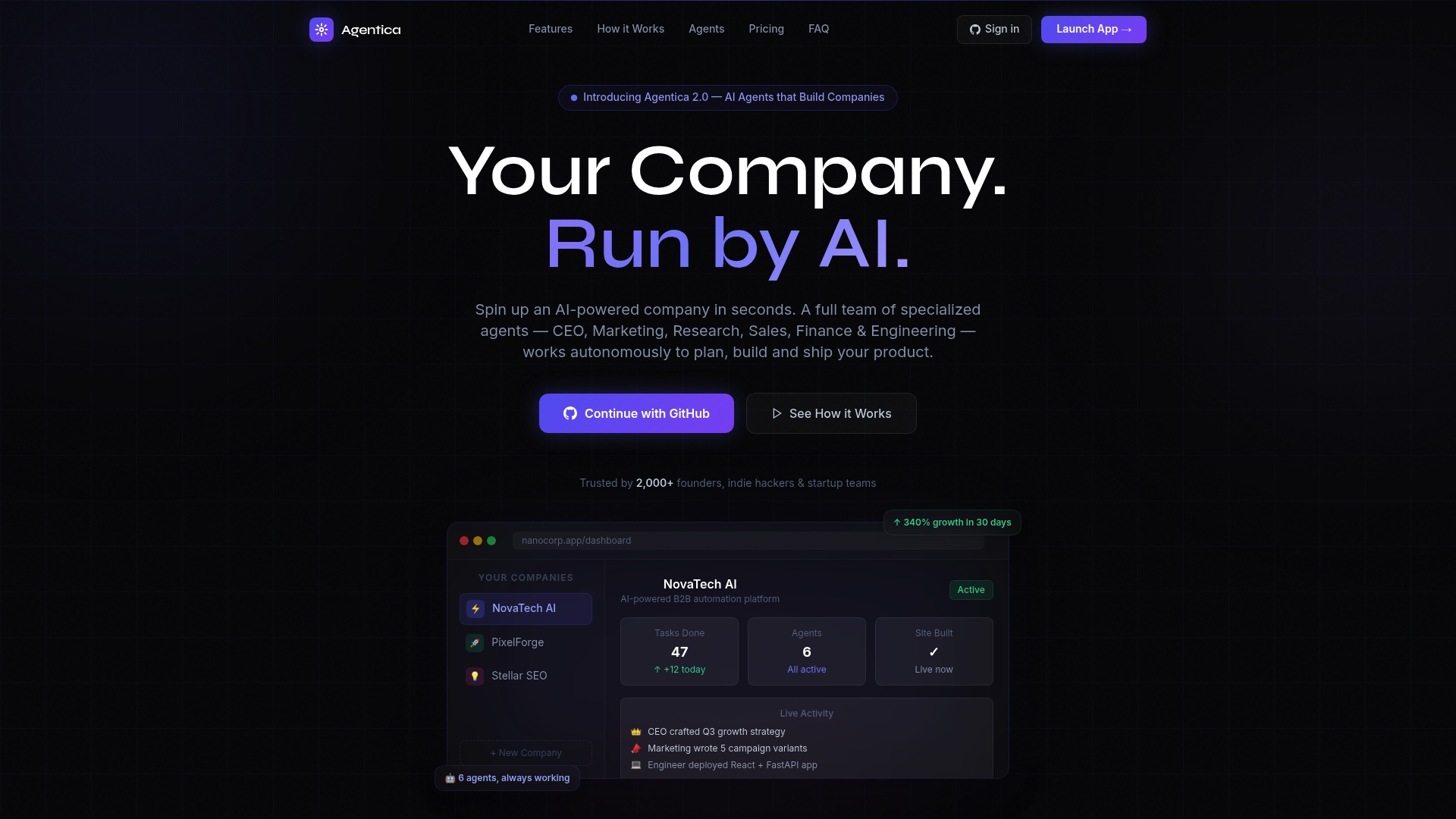
Teams using Agentica report 340% growth within 30 days, with full visibility into every agent action through real-time monitoring. Non-technical founders and marketing leads can direct the system at the vision level while agents handle execution. Explore the autonomous agent roles and see how the platform structures AI-driven marketing operations from briefing through deployment.
FAQ
What does AI actually automate in marketing operations?
AI automates data cleaning, audience segmentation, asset generation, and performance reporting. These are rule-based, repeatable tasks where speed and consistency matter more than judgment.
How is agentic AI different from using ChatGPT for marketing?
Agentic AI runs as a connected system of specialized agents with persistent memory and automated handoffs. ChatGPT and similar tools operate as single-session prompts with no memory between uses and no automated workflow connections.
Will AI replace marketing managers?
AI does not replace marketing managers. It replaces the manual execution tasks they used to perform. Managers retain responsibility for budget decisions, brand governance, and strategic direction because those require judgment AI cannot replicate.
How long does it take to implement AI in marketing operations?
A basic AI workflow with documented brand rails and a review gate system takes two to four weeks to set up properly. Rushing past the documentation phase produces fast but inconsistent outputs that require more editing than the original manual process.
What is the biggest risk of AI-driven marketing operations?
The biggest risk is deploying AI without defined brand voice rails and editorial guardrails. Without those constraints, AI output drifts from brand standards quickly, and the volume of off-brand content scales faster than a team can manually correct it.