
AI in app development is defined as the use of machine learning, natural language processing, and generative models to automate coding, testing, and decision-making across the full software development lifecycle. The role of AI in app development has moved well past experimentation. Over 80% of new mobile apps now incorporate AI components, and teams using tools like Claude Code, Semaphore sem-ai, and Agentica are shipping faster than ever before. AI does not replace developers or product managers. It removes the work that slows them down, so they can focus on the decisions that actually require human judgment.
How does AI accelerate the app development lifecycle?
AI reduces development cycle time by automating the tasks that consume the most hours without requiring the most skill. Code generation for CRUD operations, UI scaffolding, and boilerplate logic no longer needs a senior engineer. Tools like Claude Code generate these structures from natural language prompts in seconds. That shift frees experienced developers to focus on architecture, security, and the logic that actually differentiates a product.
The speed gains are measurable. AI integration cuts development cycle time by 30–50%. That is not a marginal improvement. It means a project that once took four months can ship in six to eight weeks with the same team size.

Deployment frequency tells an equally striking story. Traditional teams push code once per day. AI coding tools push that frequency to 10–20 times per day, with some pipelines deploying every 5–7 minutes. That pace changes how teams think about releases. Small, frequent updates replace large, risky launches.
AI also transforms continuous integration and testing. Automated test case generation catches regressions before a human reviewer ever sees the code. Pipelines that once required manual configuration now respond to natural language commands through tools like Semaphore sem-ai. The result is a CI/CD workflow that runs faster and requires less maintenance overhead.
Key efficiency gains from AI in the development lifecycle:
- Code generation: Automated scaffolding for CRUD, APIs, and UI components
- Test automation: AI generates and runs test cases without manual scripting
- CI/CD control: Natural language commands replace manual pipeline configuration
- Deployment frequency: Teams ship 10–20 times per day instead of once
- Cycle time: 30–50% reduction in total development time
Pro Tip: Integrate AI code generation in a dedicated branch before merging to main. Reviewing AI output before it enters your production codebase prevents technical debt from compounding silently.
What aspects of app development does AI enhance beyond coding?
AI's contribution to app development extends well beyond writing code. User behavior analysis is one of the clearest examples. AI processes session data, click patterns, and retention metrics to surface insights that would take a human analyst days to compile. Product teams use those insights to prioritize features based on actual usage rather than assumptions.
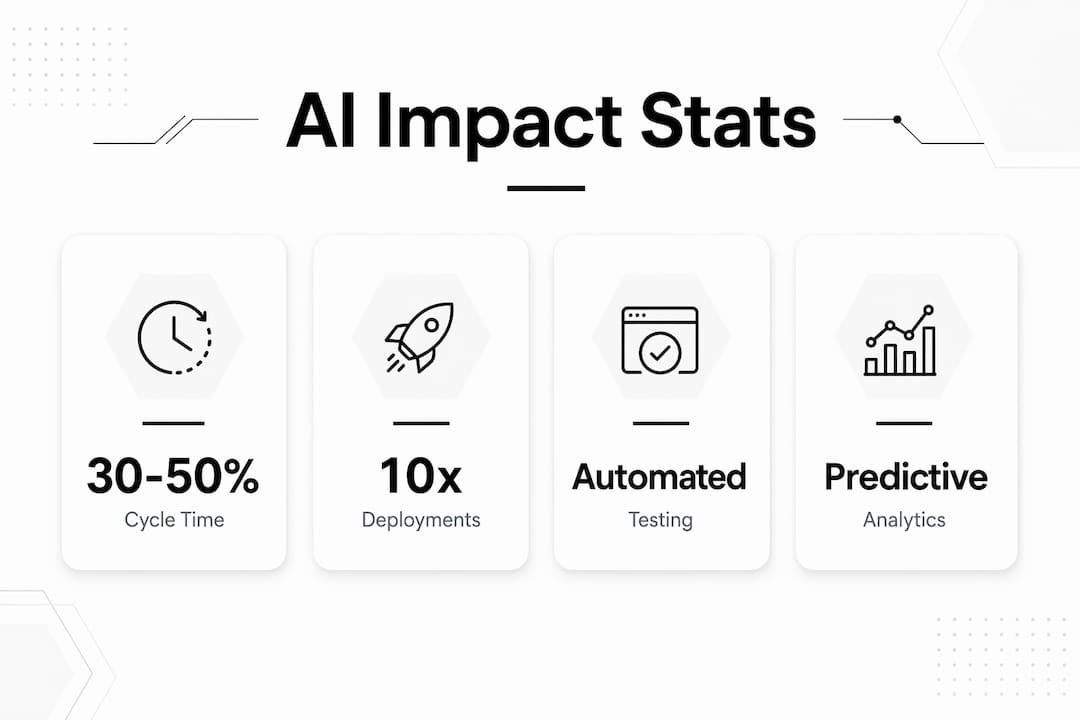
Predictive analytics adds another layer. AI models identify which features correlate with retention, which user segments churn fastest, and which onboarding steps cause drop-off. That data directly informs roadmap decisions. A study of 400 managers found AI maximizes its benefits during the early concept development stage of a product. Early-stage AI analysis produces the highest return because it shapes direction before resources are committed.
Product management itself is changing. AI now handles roadmap drafting, competitive analysis, and feature prioritization, while product managers focus on trade-offs, empathy, and final decisions. The role is shifting toward what researchers call the "AI-augmented strategist." The PM curates and validates AI outputs rather than producing first drafts manually.
Quality assurance also benefits directly. AI generates test cases from user stories, flags edge cases, and runs regression suites automatically. Teams using AI-augmented QA catch more bugs earlier, which reduces the cost of fixing them later.
Pro Tip: Never ship AI-generated feature recommendations without validating them against qualitative user research. AI identifies patterns in data. It does not understand context, emotion, or the reasons behind user behavior.
What limitations and challenges arise from AI in app development?
AI cannot reason about high-level technical architecture. This is the most important limitation developers and product managers need to understand. AI excels at CRUD tasks but cannot predict scalability bottlenecks, manage complex state across distributed systems, or evaluate security trade-offs at the architectural level. Those decisions require senior engineers.
The risks of unchecked AI-generated code are real. Every line of AI output needs human review before it enters a production system. Developers must audit AI-generated code for security vulnerabilities and scalability issues. Teams that skip this step accumulate technical debt faster than they would with traditional development, because AI generates code quickly and errors compound at the same speed.
Infrastructure choices matter too. Cloud-based centralized workflows are necessary for AI automation to work at scale. Local development environments cause configuration drift, which breaks AI-driven pipelines and creates failures that are difficult to diagnose. Centralized configuration keeps every agent and automation consistent.
The most disciplined teams separate experimental AI workflows from production pipelines entirely. A dual-path deployment model uses ephemeral AI preview environments for experimentation while keeping a gated, audited path for production releases. This structure lets teams move fast without risking stability.
- Establish human ownership of architecture. Assign senior engineers to all structural and security decisions before AI tools touch the codebase.
- Audit every AI output. Review generated code for vulnerabilities, edge cases, and scalability issues before merging.
- Centralize your configuration. Use cloud-based environments to prevent drift across AI-driven pipelines.
- Separate experiments from production. Run AI-generated workflows in preview environments before promoting to the main pipeline.
- Track technical debt actively. Log AI-generated code separately so teams can review and refactor it on a regular schedule.
Pro Tip: Treat AI-generated code like code from a junior developer. It needs review, context, and correction. The speed benefit disappears if you spend weeks debugging problems that a 10-minute review would have caught.
How does AI reshape roles and workflows for developers and product managers?
The most accurate framing for AI's role in 2026 is that leading teams treat AI as a control plane for intent. Developers express what they want in natural language. AI executes the repetitive work. Humans retain control over security, releases, and anything that requires judgment. This is not a replacement model. It is a collaboration model.
For developers, the practical shift looks like this:
- Intent over implementation: Developers describe desired behavior; AI generates the implementation
- Review over creation: Senior engineers spend more time reviewing and less time writing boilerplate
- Pipeline control: Tools like Semaphore sem-ai let developers control CI/CD workflows through natural language commands embedded directly in their tools
- Security ownership: Human engineers own all security audits, access controls, and compliance checks
Product managers face a parallel shift. AI handles drafting and analysis while PMs guide trade-offs and maintain user empathy. A PM using AI tools can produce a competitive analysis in an hour that previously took a week. The value of the PM role moves from data gathering to interpretation and decision-making.
The best teams embed AI automation directly into their CI/CD pipelines. Automated testing, deployment triggers, and monitoring alerts all run without manual intervention. Developers check dashboards and respond to exceptions rather than managing routine operations. This frees cognitive capacity for the work that actually requires human creativity.
You can learn more about how AI agents fit into development workflows and the specific roles they fill across a product team.
Comparing leading AI tools used in app development
Different tools serve different parts of the development workflow. No single platform covers everything well.
| Tool | Primary function | Best use case | Key limitation |
|---|---|---|---|
| Claude Code | Code generation and editing | Scaffolding, refactoring, logic generation | Requires human review for security and architecture |
| Semaphore sem-ai | Natural language CI/CD control | Pipeline automation and deployment triggers | Focused on CI/CD; not a general coding tool |
| Agentica (Astarlabshub) | Autonomous multi-agent development | End-to-end app building and deployment | Best suited for product-focused, non-technical founders |
| GitHub Copilot | Inline code suggestions | Real-time coding assistance in the editor | Suggestions require active developer judgment |
Agentica, built by Astarlabshub, takes a different approach than single-purpose tools. It deploys a team of specialized AI agents covering engineering, marketing, and strategy to manage the full lifecycle of building and launching a product. That model suits founders who need to move fast without assembling a large technical team. You can explore how AI tools replace traditional coding for a broader view of what automated code generation looks like in practice.
Pro Tip: Pick tools that fit your existing workflow before adding new ones. A developer already using GitHub will get faster results from GitHub Copilot than from switching to an entirely new platform. Add tools at the edges of your workflow, not at the center.
Key Takeaways
AI accelerates app development most when human oversight governs architecture, security, and final deployment decisions.
| Point | Details |
|---|---|
| Cycle time drops significantly | AI integration reduces development time by 30–50%, compressing multi-month projects into weeks. |
| Deployment frequency multiplies | Teams using AI tools ship 10–20 times per day instead of once, enabling faster iteration. |
| Human oversight is non-negotiable | AI cannot handle architectural reasoning or security audits; senior developers must own those decisions. |
| Product manager roles evolve | PMs shift from drafting to curating and validating AI outputs, focusing on trade-offs and user empathy. |
| Cloud infrastructure enables scale | Centralized, cloud-based workflows prevent configuration drift and keep AI pipelines consistent. |
What I've learned about AI in app development after watching teams get it wrong
The teams that struggle with AI in development share one pattern: they treat AI output as finished work. They merge generated code without review, ship AI-drafted roadmaps without validation, and build pipelines that nobody fully understands. Speed becomes a liability when the foundation is fragile.
The teams that get it right treat AI as a very fast junior contributor. They review everything. They own the architecture. They keep humans in the loop on anything that touches security, data, or user trust. That discipline is not a constraint on AI's value. It is what makes AI's value sustainable.
The skill shift I find most underappreciated is prompt engineering for developers. Writing a clear, specific prompt that produces usable code is a real skill. It takes practice. Developers who invest in that skill get dramatically better output from tools like Claude Code than developers who treat AI like a search engine.
Product managers face a different challenge. AI can produce a competitive analysis in minutes, but a PM who cannot evaluate whether that analysis is accurate or complete is worse off than one who did the research manually. AI amplifies judgment. It does not replace it. The managers who thrive are the ones who already had strong analytical instincts and now apply them faster.
The future I expect is tighter integration between AI agents and human decision points, not full automation. The goal is not to remove humans from the loop. The goal is to remove humans from the parts of the loop that do not require them.
— Carlos
Build your next app with Astarlabshub's autonomous agents
Astarlabshub's Agentica platform puts a full team of specialized AI agents to work on your product from day one. The agents cover engineering, marketing, and strategy, executing tasks autonomously while you focus on vision and direction. Clients report 340% growth within 30 days of deployment.
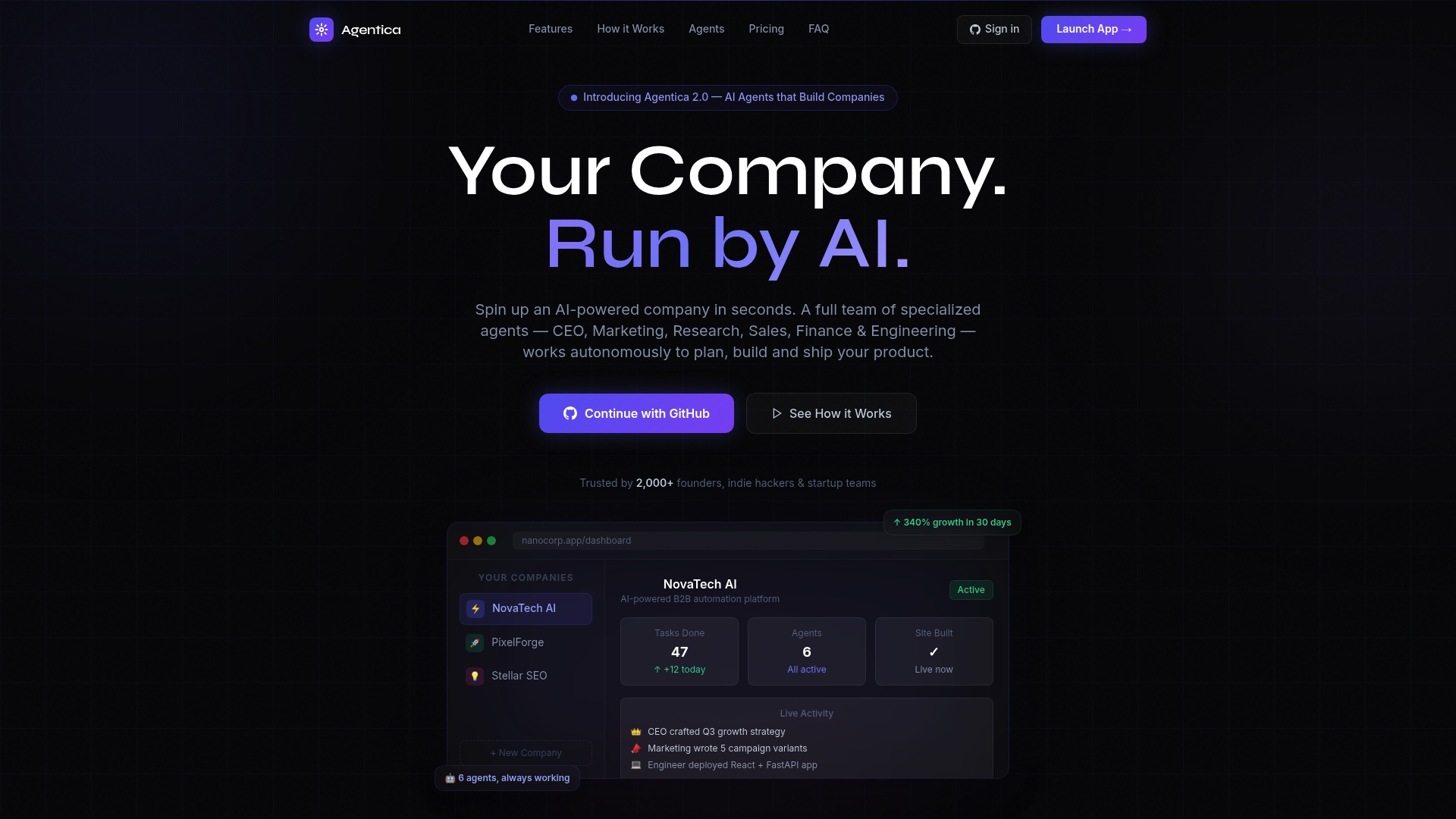
Agentica is built for founders and product teams who need to move fast without hiring a large technical staff. The platform offers full transparency and real-time monitoring so you always know what the agents are doing. Explore the full feature set and autonomous agent roles to see how Agentica fits your next build.
FAQ
What is the role of AI in app development?
AI automates repetitive tasks like code generation, testing, and pipeline management while providing data-driven insights for product decisions. Human developers remain responsible for architecture, security, and quality oversight.
How much does AI reduce app development time?
AI integration reduces development cycle time by 30–50%. Teams also increase deployment frequency from once daily to 10–20 times per day.
Can AI replace developers in app development?
AI cannot replace developers. It cannot perform high-level architectural reasoning, security audits, or complex state management. Senior developers must own all structural and security decisions.
What AI tools do app developers use most?
Developers commonly use Claude Code for code generation, Semaphore sem-ai for CI/CD automation, and GitHub Copilot for inline suggestions. Platforms like Agentica from Astarlabshub cover the full development and deployment lifecycle with autonomous agents.
How does AI change the product manager role?
Product managers shift to AI-augmented strategists who curate and validate AI outputs rather than producing first drafts manually. AI handles analysis and drafting; PMs own trade-offs and final decisions.