
AI in brand strategy execution is defined as the practice of embedding AI agents into marketing workflows to automate content production, enforce brand consistency, and deliver faster strategic insights while humans retain oversight and creative judgment. This is not about replacing brand strategists. It is about building a hybrid operating model where tools like Adobe Brand Intelligence and Google AI Brief handle repeatable execution tasks, and your team focuses on standards, taste, and final approval. The role of AI in brand strategy execution has shifted from experimental to operational. Brand strategists who treat AI as a standalone prompt tool are already falling behind those who have wired it directly into their marketing operating models.
How does the role of AI in brand strategy execution reshape workflows?
Effective AI-enabled brand execution requires explicit hybrid partnership design. Think with Google recommends mapping every workflow with defined human-AI handoffs, specifying who commissions a task, who performs it, who reviews the output, who approves it, and what happens when outputs are weak or conflicting. That level of specificity is what separates teams that scale AI successfully from those that create chaos.
The shift in human roles is real and significant. Brand strategists move away from producing content and toward setting standards, defining escalation rules, and making final judgment calls. AI handles the volume. Humans handle the judgment. This division only works when leadership makes explicit decisions about where AI acts autonomously and where a human must intervene.
The biggest risk of skipping this design step is black-box AI misuse. When no one defines the handoff, AI agents operate without guardrails. Outputs go live without review. Brand voice drifts. Humans and AI working together is not enough without explicit responsibility and escalation definitions. The framework must be documented, not assumed.
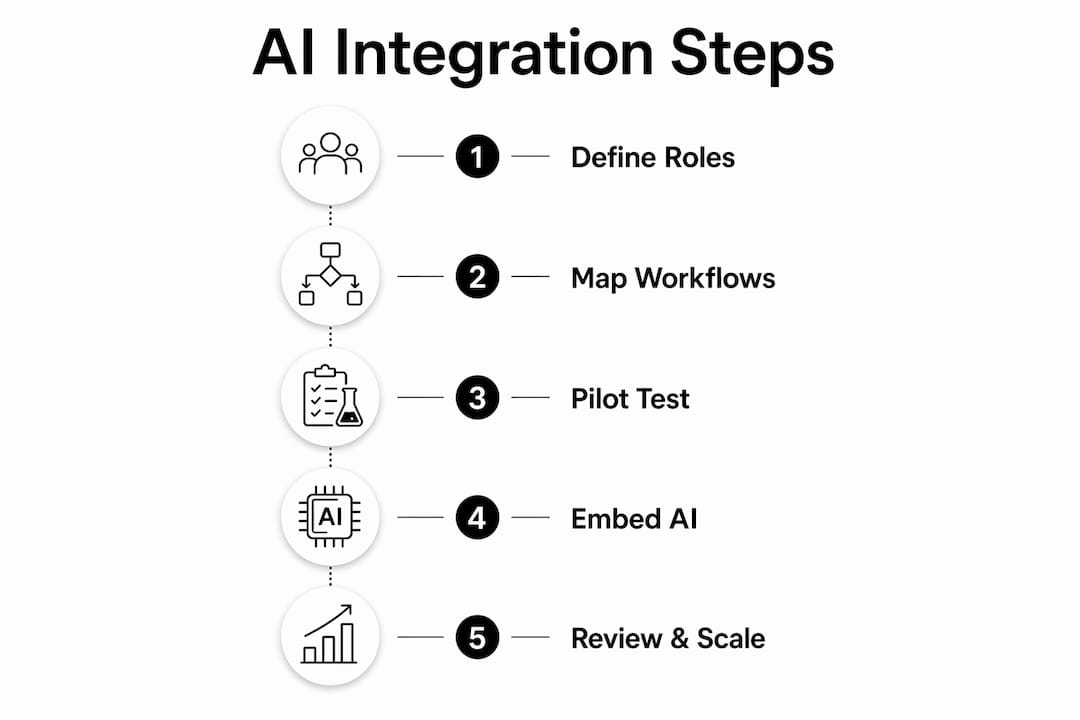
- Map every workflow step. Identify which tasks AI commissions, executes, and delivers for review.
- Define escalation triggers. Specify what output quality or content type requires human approval before publishing.
- Assign final judgment. Name the human role responsible for brand approval at each stage.
- Document handoff protocols. Write down what happens when AI output is weak, off-brand, or ambiguous.
Pro Tip: Build a one-page workflow map for each major content type, such as social posts, campaign briefs, and product copy. Show exactly where AI stops and a human picks up. Share it with every team member who touches that workflow.
Why embedding AI into marketing operating models matters more than prompting

Most marketing organizations have low coordination of AI agents. Deloitte Canada's research on agentic marketing shows that isolated prompting produces inconsistent results and creates compliance risks. The fix is not better prompts. It is embedding AI into the marketing operating model from the start.
Embedding means documenting processes, data context, and measurement frameworks before scaling AI across campaigns. It means your AI agents know your brand voice, your audience segments, your legal constraints, and your approval chain. Without that context, AI produces generic output that erodes brand distinctiveness over time.
Governance must be integrated from the beginning, not retrofitted after problems appear. Brand integrity, intellectual property protection, and regulatory compliance all require rules that AI agents can reference during execution. When governance is added late, teams spend more time correcting AI outputs than they save by using AI in the first place.
- Document brand context centrally. Store voice guidelines, visual standards, and audience definitions in a single location that AI agents can access.
- Build measurement into the workflow. Track brand consistency scores and consumer engagement metrics from day one, not after launch.
- Integrate compliance rules as agent constraints. Define what AI cannot publish without human review, including claims, pricing, and regulated content.
- Avoid retrofitting governance. Teams that add rules after deployment face brand drift that is difficult and expensive to reverse.
Pro Tip: Before scaling any AI-driven marketing workflow, run a two-week pilot with full human review of every output. Use that review data to train your AI agents and refine your governance rules before removing human checkpoints.
What are the key governance and transparency considerations in AI-assisted brand execution?
Consumer trust is the most fragile variable in AI-assisted brand execution. 60% of U.S. consumers say the word "AI" in brand messaging is a turnoff. That finding does not mean brands should hide AI use. It means brands must lead with value and transparency, not with the technology label.
The same research shows that 86% of consumers distrust AI answers without clear attribution. That number points directly to a governance requirement. Every AI-generated piece of content needs a clear chain of accountability. Who briefed the AI? Who reviewed the output? What brand standards governed the generation?
"Consumer expectations demand transparent, relevant AI outputs to maintain trust and brand credibility, not just efficiency." — Accenture
Google's AI Brief addresses this directly. The tool translates brand guidelines into natural language instructions that govern AI campaign outputs, with live review and audit capabilities. It replaces rigid keyword management with flexible AI guidance and makes every interpretation visible before deployment. That auditability is what builds internal confidence and external trust.
- Attribute AI-generated content clearly. Define internal standards for when and how AI involvement is disclosed.
- Use audit tools. Platforms like Google AI Brief create a record of how brand guidelines shaped each output.
- Prioritize relevance over volume. Accenture reports that active Gen AI users rank AI second only to physical stores for product recommendations, but only when outputs are relevant and accurate.
- Design attribution into the workflow. Do not add transparency as an afterthought. Build it into the content production process from the start.
What are the practical limits of AI's creative role in brand differentiation?
AI can handle about 80% of the design and prototyping process. The Drum's analysis makes clear that the remaining 20% requires human creative direction, brand voice judgment, and sensitivity to interaction nuances that AI cannot replicate. That 20% is where brand differentiation lives.
The risk of ignoring this boundary is brand homogenization. When every brand uses the same AI tools with similar prompts and similar training data, outputs converge. Logos look alike. Copy sounds alike. Campaign structures mirror each other. Speed gains from AI become a competitive disadvantage when they produce a brand that looks like everyone else.
| Task | AI capability | Human requirement |
|---|---|---|
| Layout and template generation | High | Low |
| Copy drafting at volume | High | Review and tone calibration |
| Brand voice definition | Low | Full human ownership |
| Creative direction and concept | Low | Full human ownership |
| Interaction design nuance | Low | Full human ownership |
| Consistency enforcement | High | Governance setup only |
The strategic move is to redirect the time AI saves back into distinctiveness. If AI handles 80% of design production, your creative team gains capacity. That capacity should go toward the work AI cannot do: defining what makes your brand irreplaceable, building experiences that create genuine emotional connection, and setting the creative standards that govern everything AI produces.
For brand strategists studying AI's role in competitive analysis, this boundary matters even more. AI can map the competitive field at scale. Humans must decide what position to occupy within it.
How can brand strategists apply AI effectively for execution and consumer trust?
Practical application starts with designing risk-tiered decision classes. Think with Google advises assigning each content type to one of three tiers: auto-run by AI, AI-generated with human edit, or AI-drafted with full human approval before publication. This structure prevents workflow collapse and preserves brand oversight without sacrificing the speed that makes AI worth using.
- Define your three decision tiers. Categorize every content type your team produces by risk level and assign an AI autonomy level to each.
- Embed brand intelligence centrally. Use tools like Adobe Brand Intelligence to create a dynamic source of truth that AI agents reference during execution, updated continuously with review feedback and approval annotations.
- Build feedback loops into every workflow. Every human approval or rejection should train your AI agents. Treat review cycles as ongoing learning data, not just quality control.
- Design transparency into consumer-facing content. Decide in advance which content types carry attribution language and how AI involvement is communicated to your audience.
- Measure brand integrity, not just output volume. Track consistency scores, consumer engagement rates, and brand sentiment alongside production metrics. Volume without consistency is not a win.
For teams building AI-driven marketing workflows, the combination of risk-tiered decisions and centrally encoded brand context is the most reliable path to scalable execution without brand drift. Specialized AI agents that understand their role in the workflow produce better outputs than general-purpose tools given ad hoc instructions.
Key Takeaways
The most effective approach to AI in brand strategy execution combines explicitly designed human-AI workflows, centrally encoded brand context, and governance built into the process from the start.
| Point | Details |
|---|---|
| Design human-AI handoffs explicitly | Map who commissions, executes, reviews, and approves every content type before scaling AI. |
| Embed governance from day one | Document brand context, compliance rules, and measurement frameworks before deploying AI agents. |
| Transparency builds consumer trust | 60% of U.S. consumers distrust AI brand messaging without clear attribution and relevance. |
| Protect the creative 20% | AI handles structural tasks well; human creative direction is the primary source of brand differentiation. |
| Use risk-tiered decision classes | Assign auto-run, edit, or escalate status to each content type to maintain oversight at AI speed. |
Where most brand teams get AI integration wrong
The pattern I see most often is teams that adopt AI tools enthusiastically and governance reluctantly. They move fast on the prompting side and slow on the standards side. Then, six months in, they are dealing with off-brand content that went live without review, consumer complaints about generic messaging, and internal confusion about who approved what.
The uncomfortable truth is that AI does not create brand problems. Unclear human decisions create brand problems. AI just executes them at scale and speed. Every brand drift issue I have seen in AI-assisted execution traces back to a moment where no one defined the rule, the handoff, or the escalation path.
The teams that get this right share one habit. They treat AI workflow design as a leadership decision, not a technology decision. The CMO or brand director owns the human-AI operating model. They do not delegate it to a tool vendor or a junior team member. That ownership is what keeps brand integrity intact when AI is running at full speed.
My honest advice: start with one workflow, design it completely, run it with full human review for 30 days, then use that data to set your autonomy levels. Do not scale before you have evidence that your governance holds. Speed is only an advantage when the output is worth publishing.
— Carlos
Astarlabshub's Agentica platform for AI-powered brand execution
Brand strategists who are ready to move from manual AI prompting to a fully structured agentic model have a direct path forward with Astarlabshub's Agentica platform.
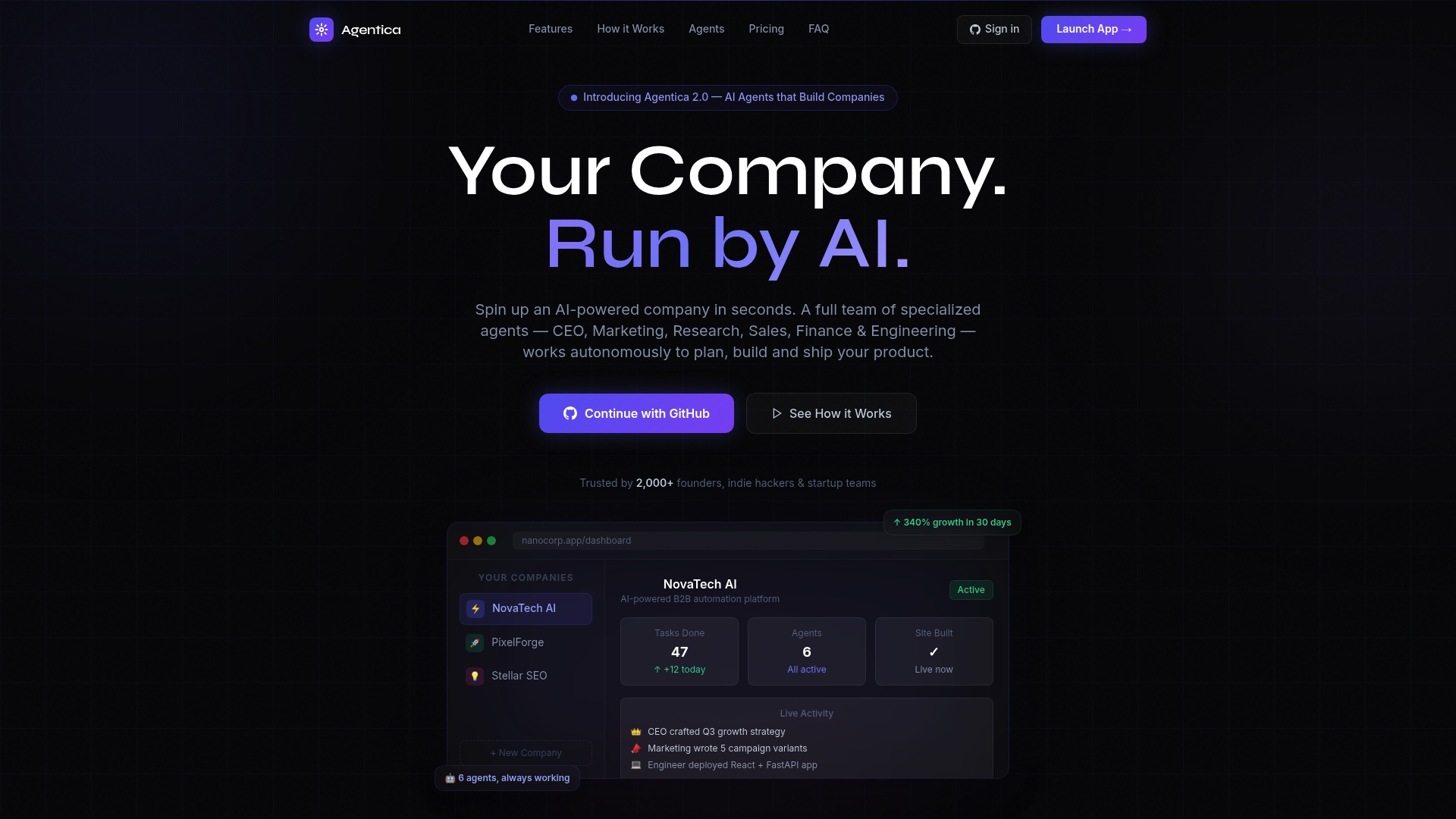
Agentica deploys specialized AI agents covering marketing, strategy, and operations, each with defined roles that mirror the human-AI workflow design this article describes. The platform's real-time monitoring gives brand teams full visibility over what AI is executing and why, which addresses the transparency and auditability requirements that consumer trust demands. Astarlabshub reports 340% growth for clients within 30 days of deployment. You can review the full feature set and pricing directly on the Agentica platform page.
FAQ
What is the role of AI in brand strategy execution?
AI in brand strategy execution functions as a hybrid partner that automates content production, enforces brand consistency, and delivers faster insights while humans retain oversight and creative judgment. Effective execution requires explicitly designed human-AI workflows with defined handoffs and escalation rules.
How does AI affect consumer trust in brand messaging?
60% of U.S. consumers say "AI" in brand messaging is a turnoff, and 86% distrust AI answers without clear attribution. Brands must design transparency and relevance into AI-generated content to maintain credibility.
What tasks should AI handle versus humans in brand execution?
AI competently handles about 80% of design, prototyping, and content production tasks. Human creative direction, brand voice definition, and final approval must remain with your team to preserve brand differentiation.
What is brand drift and how does AI cause it?
Brand drift occurs when AI agents produce off-brand content faster than review processes can catch it. The fix is encoding brand context centrally and building human feedback loops into every AI workflow from the start.
Which AI tools are most relevant for brand governance?
Adobe Brand Intelligence and Google AI Brief are the leading tools for brand governance in AI-assisted execution. Adobe automates content workflows while enforcing brand standards; Google AI Brief translates brand guidelines into auditable AI campaign instructions.