
AI in social media management is defined as the use of machine learning, natural language processing, and generative models to automate content creation, scheduling, analytics, and audience engagement at scale. The role of AI in social media management has shifted from simple post scheduling to full-cycle strategy support. 97% of marketing leaders now consider AI competency essential, and 93% of practitioners say it eases creative fatigue. That is not a trend. That is a structural change in how social media teams operate. AI does not replace the social media manager. It removes the work that was slowing them down.
How does AI optimize content creation and ideation in social media?
Content creation is where most social media managers feel the daily grind. AI changes that equation by acting as a first-draft engine. Generative AI models produce caption options, headline variants, hashtag sets, and post structures in seconds. The manager's job shifts from writing from scratch to editing with intent.

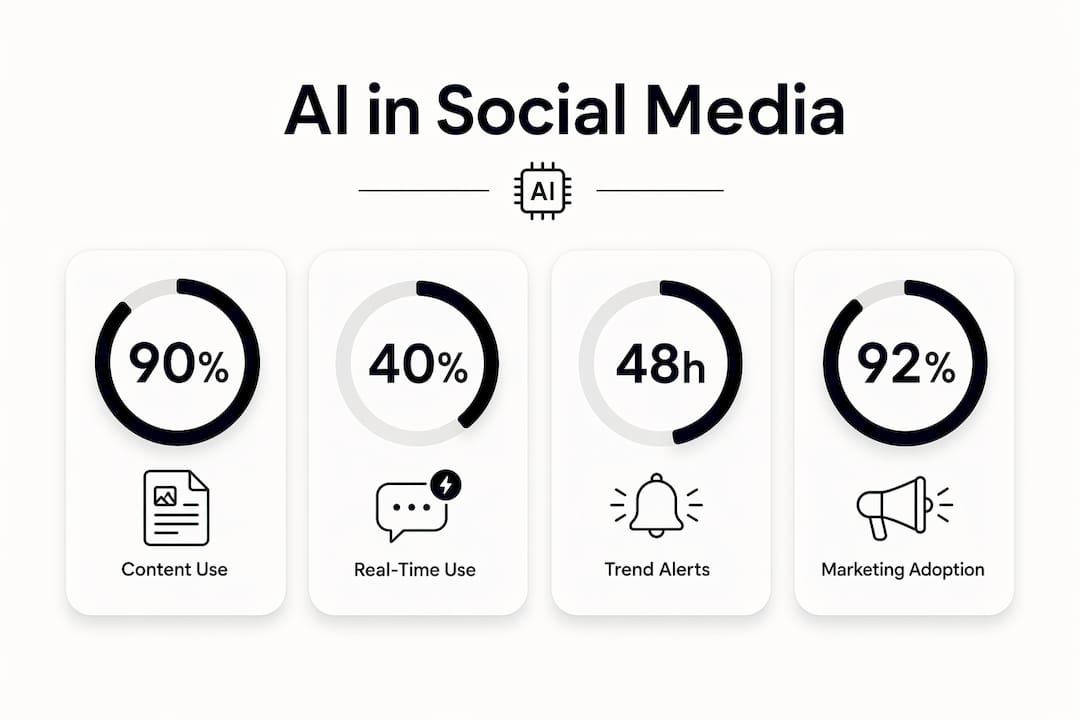
90% of content creators and 92% of marketers have used AI-generated content as of Q2 2026. That adoption rate signals that AI-assisted drafting is now a baseline expectation, not an experiment. Teams that skip it are producing less content with more effort.
AI content tools work best when you treat them as a speed layer. The model generates volume. You apply brand voice, cultural context, and editorial judgment. A post about a product launch in the healthcare space, for example, needs a tone that no general-purpose model will get right on the first pass. Human editing is not optional. It is the quality control step that separates effective content from generic noise.
AI also helps with ideation beyond captions. It can analyze top-performing posts in your niche, identify content gaps, and suggest formats. You can incorporate generative AI into your weekly planning cycle to build a content calendar in a fraction of the time it used to take.
Key benefits of AI in content creation:
- Caption drafting: Generate multiple tone variants (professional, casual, witty) for A/B testing.
- Hashtag research: AI identifies trending and niche-relevant tags based on real-time data.
- Format suggestions: AI recommends Reels, carousels, or static posts based on engagement history.
- Repurposing: AI converts long-form blog content into platform-specific social snippets.
- Multilingual adaptation: AI drafts localized versions of posts for global audiences.
Pro Tip: Always run AI-generated drafts through your brand voice checklist before publishing. Create a short style guide with 10 to 15 "do and don't" examples and paste it into your AI prompt as context. The output quality improves significantly.
In what ways does AI enhance scheduling, timing, and trend identification?
Timing a post correctly can double its reach without changing a single word. AI analyzes your audience's historical activity patterns and identifies the windows when your followers are most likely to engage. This is not guesswork. It is pattern recognition applied to your specific account data.
AI scheduling tools go further than picking a time slot. They adapt based on real-time signals. If engagement drops on Tuesday afternoons, the system adjusts. The most effective AI workflows integrate scheduling directly into planning tools, cutting the context switching that wastes hours each week.
Trend identification is where AI delivers a genuine competitive edge. Social platforms move fast. A topic that is relevant on Monday can be stale by Wednesday. AI monitors keyword velocity, hashtag growth, and content format shifts across platforms to surface trends before they peak. That early signal gives you time to create relevant content while the conversation is still building.
Here is how AI-driven scheduling and trend tools work in practice:
- Audience activity mapping: AI scans weeks of engagement data to build a timing model specific to your account.
- Dynamic rescheduling: If a post underperforms in the first hour, AI can flag it for a time adjustment or format change.
- Trend scoring: AI assigns a relevance score to emerging topics based on your niche, audience demographics, and past performance.
- Cross-platform coordination: AI schedules content across Instagram, LinkedIn, X, and TikTok simultaneously, adjusting format and copy for each platform.
- Calendar gap detection: AI identifies days or time slots with no planned content and prompts you to fill them.
Pro Tip: Set your AI trend alerts to notify you 48 hours before a topic peaks, not when it is already viral. Most platforms surface trending topics after the wave has crested. AI tools that monitor keyword velocity give you the lead time to act.
How does AI-powered analytics and social listening improve performance?
Real-time analytics is the area where AI delivers the clearest return on investment. 40% of marketers now use AI-powered tools for real-time performance reporting and campaign optimization. That number will rise sharply as more teams see the speed advantage over manual reporting.
AI analytics tools process engagement data, reach metrics, click-through rates, and conversion signals simultaneously. They surface the insights that matter and suppress the noise. A human analyst reviewing the same data set takes hours. An AI system flags the same patterns in minutes.
Social listening adds another layer. AI-powered listening tools track sentiment shifts, brand mentions, and competitor activity at scale. They detect when a brand mention turns negative before it becomes a crisis. They identify when a competitor launches a campaign so you can respond with your own positioning. This is not passive monitoring. It is active intelligence.
AI tools connected to social-first real-time data outperform general-purpose AI models because they are trained on platform-specific signals. A generic model does not know that a spike in Instagram Story views on a Tuesday means something different than the same spike on a Saturday. Specialized tools do.
| AI analytics capability | Business benefit |
|---|---|
| Real-time sentiment tracking | Detect brand reputation shifts within hours, not days |
| Competitor activity monitoring | Identify gaps and opportunities in competitor campaigns |
| Engagement pattern analysis | Pinpoint which content formats drive the most conversions |
| Automated performance reports | Reduce manual reporting time and free up strategy hours |
| Audience segmentation insights | Tailor messaging to specific follower groups based on behavior |
You can also use AI analytics to support campaign management automation, where performance data feeds directly into budget allocation and content decisions without manual intervention.
What are the limitations, risks, and ethical considerations of AI in social media?
AI does not replace human judgment. It amplifies whatever you feed it. That is a strength when your inputs are good. It is a liability when they are not.
The most documented risk is bias. Large language models used in social media content introduce hidden, directional biases that affect public opinion over time. A single biased post is harmless. Millions of AI-generated posts carrying the same subtle slant can shift public discourse in measurable ways. That is not a hypothetical. Oxford Internet Institute researchers documented it in july 2026.
AI also struggles with emotional intelligence and cultural nuance. A crisis response, a community apology, or a post addressing a sensitive social topic requires human authorship. Transitioning from rule-based automation to AI agents requires a human-in-the-loop for sensitive interactions. Brands that skip this step expose themselves to reputation damage that no AI tool can repair.
Brand voice drift is a slower, less visible risk. Continuous human review is essential to prevent AI outputs from gradually diverging from your brand's standards and tone. Without regular audits, your social feed can start to sound like every other brand using the same model.
Ethical practices to protect your brand:
- Bias audits: Review AI-generated content monthly for patterns that skew sentiment or representation.
- Crisis protocols: Never let AI publish autonomously during a brand crisis. Human review is mandatory.
- Transparency policies: Disclose AI-assisted content where platform guidelines or audience trust requires it.
- Voice audits: Compare AI-generated posts against your brand style guide quarterly to catch drift early.
- Data privacy compliance: Confirm that AI tools handling audience data meet GDPR and CCPA standards.
Key Takeaways
AI in social media management works best as a speed layer for routine tasks, with human oversight handling strategy, ethics, and brand voice.
| Point | Details |
|---|---|
| AI accelerates content creation | Generative AI drafts captions, hashtags, and formats in seconds, freeing managers for editing and strategy. |
| Timing and trends improve with AI | AI analyzes audience activity data to schedule posts at peak engagement windows and surface trends early. |
| Analytics gains are measurable | 40% of marketers use AI for real-time reporting, cutting analysis time and improving campaign decisions. |
| Bias and drift are real risks | LLMs introduce subtle bias at scale; regular audits and human review prevent brand voice drift. |
| Human oversight is non-negotiable | Sensitive interactions, crisis responses, and ethical decisions require human authorship, not AI automation. |
Why I think most teams are using AI backwards
Most social media teams adopt AI to produce more content. That is the wrong starting point. Volume is not the problem. Clarity is.
The teams I have seen get the most out of AI start with their analytics layer, not their content layer. They use AI to understand what is already working, then use generative tools to produce more of that. The teams that start with content generation end up with a lot of posts that perform exactly as poorly as their old ones, just faster.
The bias finding from the Oxford Internet Institute is the detail that should make every social media manager pause. You are not just publishing posts. At scale, you are contributing to a content environment that shapes how people think. That is a responsibility that no AI model is equipped to carry alone. The model does not know your community. You do.
The practical lesson I keep coming back to is this: AI is most valuable when it removes the tasks that prevent you from doing the work only you can do. Scheduling, first drafts, and performance summaries are tasks AI handles well. Community building, crisis judgment, and brand storytelling are tasks where human presence is the product.
Treat AI as a capable assistant with no common sense. Brief it well, review its work, and never let it publish anything you have not read. That discipline is what separates teams that build trust with their audiences from teams that just produce content.
— Carlos
AI-powered social media management with Astarlabshub
Social media managers who want to move from manual workflows to AI-assisted operations need more than a single tool. They need a system where AI handles the repeatable work while humans stay in control of strategy and relationships.
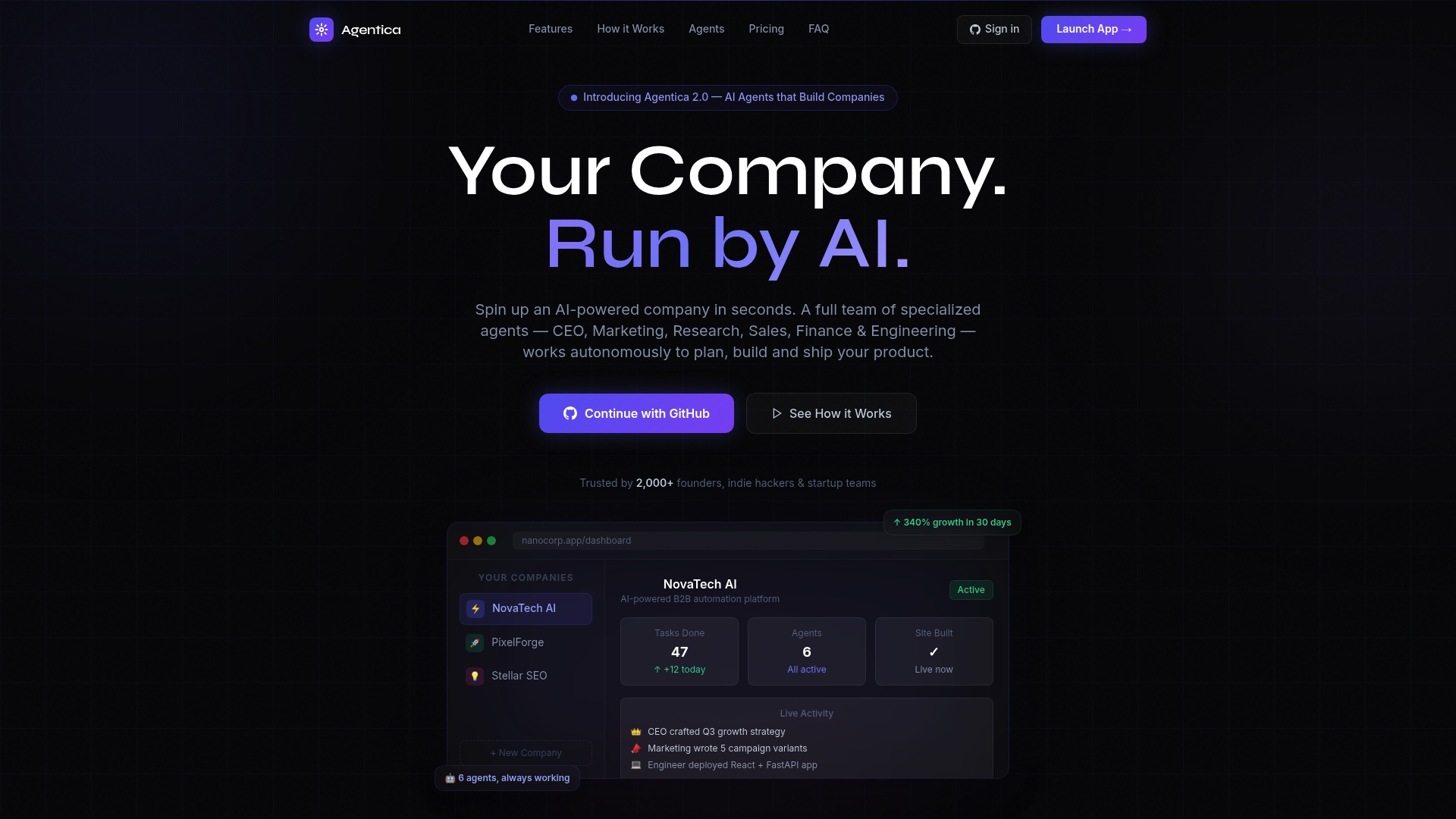
Astarlabshub builds AI agent systems designed for exactly that balance. The platform's specialized agents handle content planning, scheduling, and performance analysis while giving you full visibility into every action taken. There is no black box. You see what the AI is doing and why. For teams ready to put AI to work across their full social media workflow, Astarlabshub is built to support that transition without sacrificing oversight or brand integrity.
FAQ
What is the role of AI in social media management?
AI in social media management automates high-volume tasks like content drafting, scheduling, and performance reporting while providing real-time audience insights. It frees social media managers to focus on strategy, community building, and creative decisions.
How does AI help with social media content creation?
AI generates caption drafts, hashtag suggestions, and format recommendations based on past performance data. As of Q2 2026, 90% of content creators have used AI-generated content, making it a standard part of the production workflow.
What are the risks of using AI for social media?
The primary risks are bias accumulation, brand voice drift, and poor handling of sensitive interactions. Oxford Internet Institute research confirms that AI-generated social content can subtly shift public opinion at scale, making human review essential.
How does AI analytics improve social media performance?
AI analytics tools process engagement, reach, and sentiment data in real time, surfacing patterns that manual review would miss. 40% of marketers already use AI for real-time campaign optimization, reducing reporting time and improving decision speed.
Does AI replace social media managers?
AI does not replace social media managers. It handles repeatable, high-volume tasks so managers can focus on judgment-intensive work like crisis response, community engagement, and brand storytelling, where human presence is the differentiating factor.